Minimalist and Modern are two of the most-confused styles in interior design, and the confusion is earned: they overlap in real ways. The core distinction: modern is an aesthetic language: clean lines, industrial materials, function-first form, while minimalism is a discipline of reduction that can be applied to almost any language. A modern room can be fully furnished; a minimalist room, by definition, cannot. The table below breaks the differences down dimension by dimension, with AI renders of each style so you can see the split rather than take our word for it.
Style comparison
Minimalist vs Modern: What's the Difference?
Minimalist and Modern at a glance
Minimalist
Negative space, a restrained palette, and one piece per room that earns attention.
Signature palette
Signature elements
- Generous negative space
- A five-color-or-fewer palette
- One statement piece per room
- Hidden, seamless storage
Minimalist renders
Large windowed home-gym with recessed storage turned tidy
Home GymMinimalist
Try this styleBright fitted shelving and bench under the wide window
Walk In ClosetMinimalist
Try this styleModern
Clean lines, open plans, and surfaces kept deliberately bare.
Signature palette
Signature elements
- Clean-lined, low-profile furniture
- Open, uncluttered floor plans
- Glass, steel, and polished concrete
- Monochrome base with one restrained accent
Modern renders
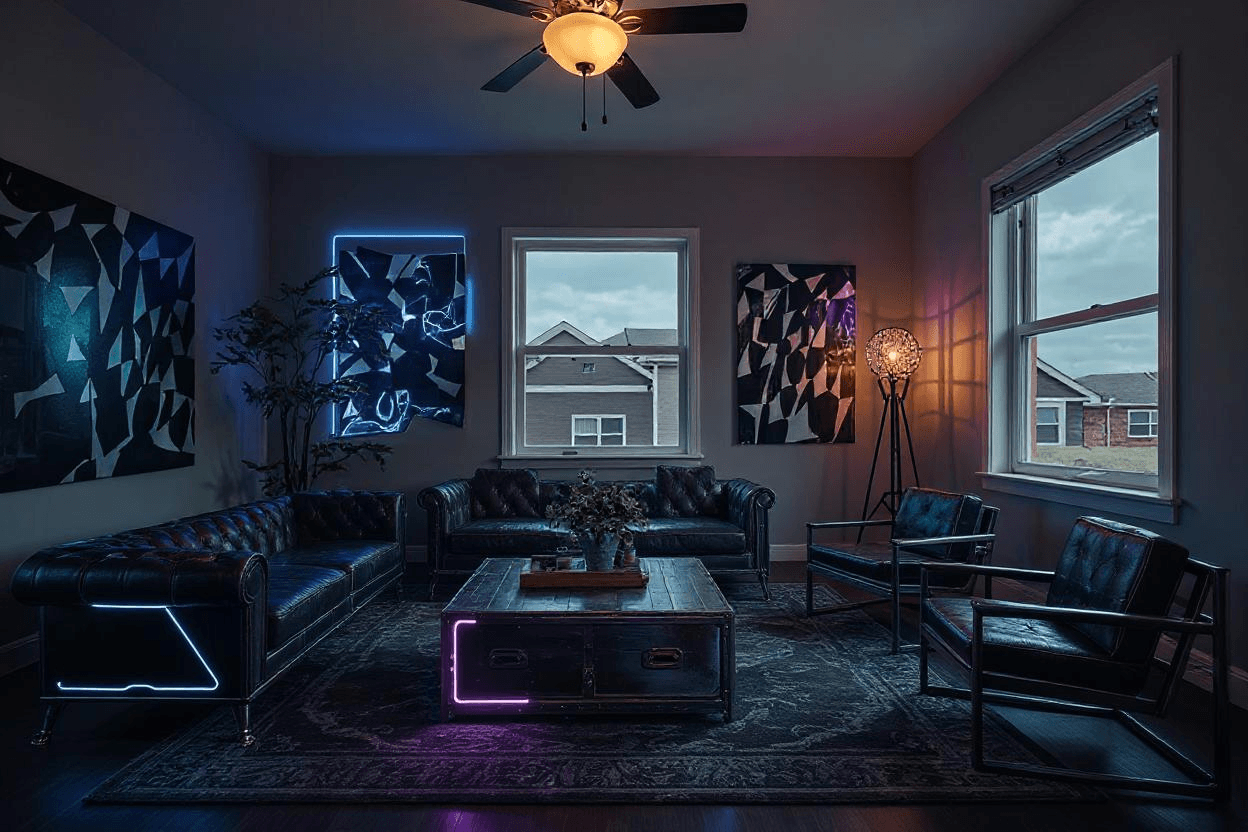
Design Session - 6/21/2025
Living RoomModern
Try this styleModern Living Room Staging
Living RoomModern
Try this styleMinimalist vs Modern: key differences
| Dimension | Minimalist | Modern |
|---|---|---|
| Mood | Negative space, a restrained palette, and one piece per room that earns attention. | Clean lines, open plans, and surfaces kept deliberately bare. |
| Palette | Work in warm off-whites and stone grays with near-black for weight; the discipline is fewer colors, repeated more often. | Keep the envelope white-to-charcoal and let a single cool accent: the blue in this palette: appear no more than twice in a room. |
| Materials | Raw oak, linen, and matte ceramic | Glass, steel, and polished concrete |
| Furniture lines | Spare silhouettes with one statement piece per room | Straight, low-profile, and rectilinear |
| Best for | Bedroom, living room, and home office | Living room, kitchen, and home office |
| Budget | Budget-friendly to start. You simply buy less, but each piece is on display | Mid-range: editing does the work, and materials set the ceiling |
Which one is yours?
Choose Minimalist if…
- You want negative space, a restrained palette, and one piece per room that earns attention.
- You'd rather live with raw oak, linen, and matte ceramic than glass, steel, and polished concrete.
- The room you care about most is the bedroom: nothing supports sleep like a room with nothing left to process.
Choose Modern if…
- You want clean lines, open plans, and surfaces kept deliberately bare.
- You'd rather live with glass, steel, and polished concrete than raw oak, linen, and matte ceramic.
- The room you care about most is the living room: an open, low-slung seating plan shows off clean architecture better than any other room.
Frequently asked
What's the main difference between minimalist and modern?
Modern is an aesthetic language: clean lines, industrial materials, function-first form, while minimalism is a discipline of reduction that can be applied to almost any language. A modern room can be fully furnished; a minimalist room, by definition, cannot.
Can you mix minimalist and modern?
Yes: minimalist and modern are adjacent enough to blend without clashing. Pick one as the base for the walls and large furniture, then borrow from the other in accents: raw oak, linen, and matte ceramic can sit comfortably next to glass, steel, and polished concrete as long as the overall palette stays tight. The renders on this page show how each style reads on its own, which makes it easier to decide the ratio.
Which is more affordable, minimalist or modern?
Neither has a fixed price tag, but they skew differently. Minimalist is budget-friendly to start. You simply buy less, but each piece is on display. Modern is mid-range: editing does the work, and materials set the ceiling. In both cases, discipline with the palette and editing does more for the result than the receipts do.
Which suits small spaces better, minimalist or modern?
They behave differently in tight rooms. Minimalist is the small-space specialist: negative space is the style itself. Modern is excellent in small rooms: bare surfaces and open plans visually enlarge them. If your space is genuinely small, weight those verdicts heavily: scale forgives less than color does.
Render your own room in the Minimalist style
About 15 seconds · Start from $9
Render your own room in the Modern style
About 15 seconds · Start from $9