Drag the slider or use arrow keys to compare
Symmetrical bedside swap and soft brass lighting in a neutral bedroom
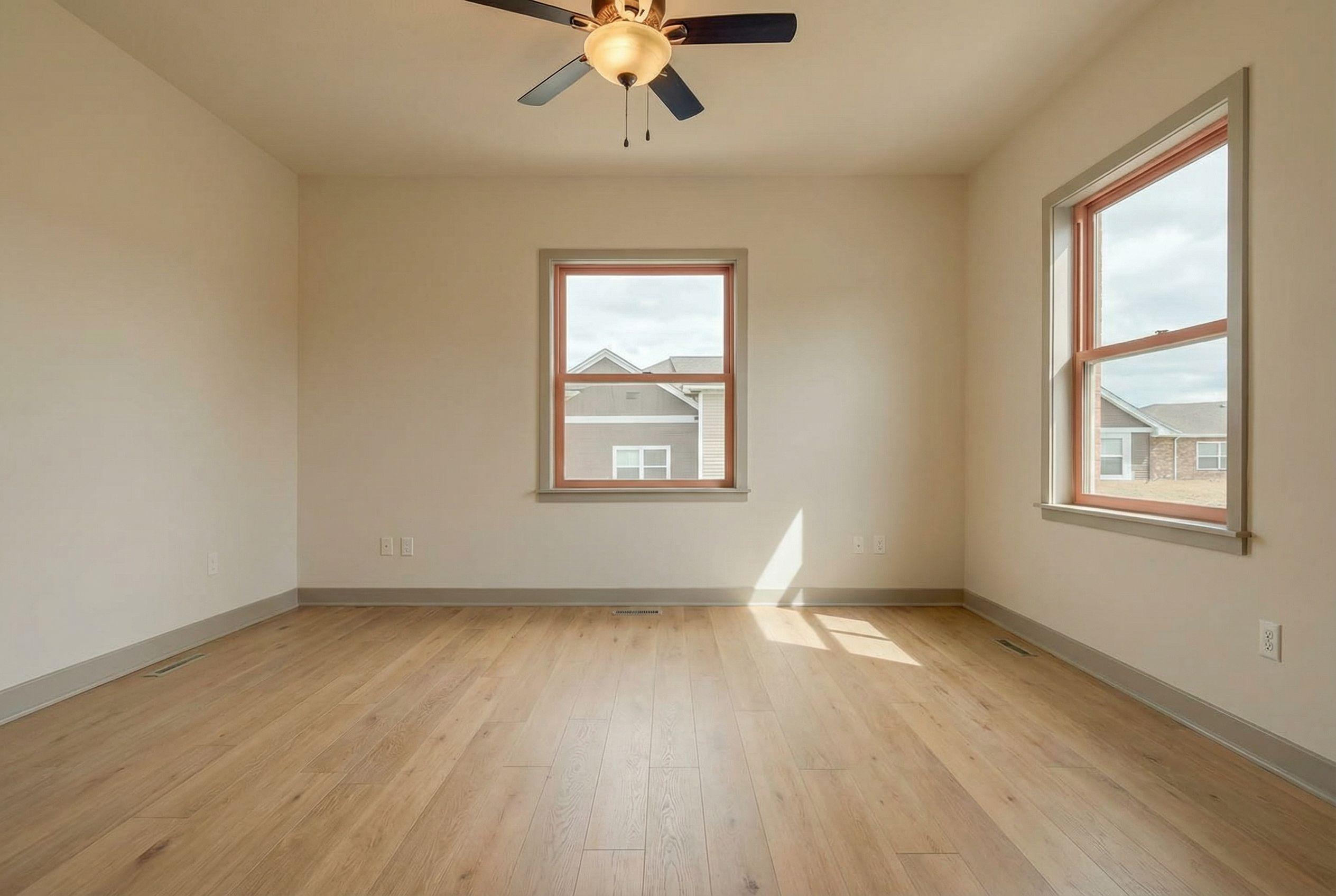
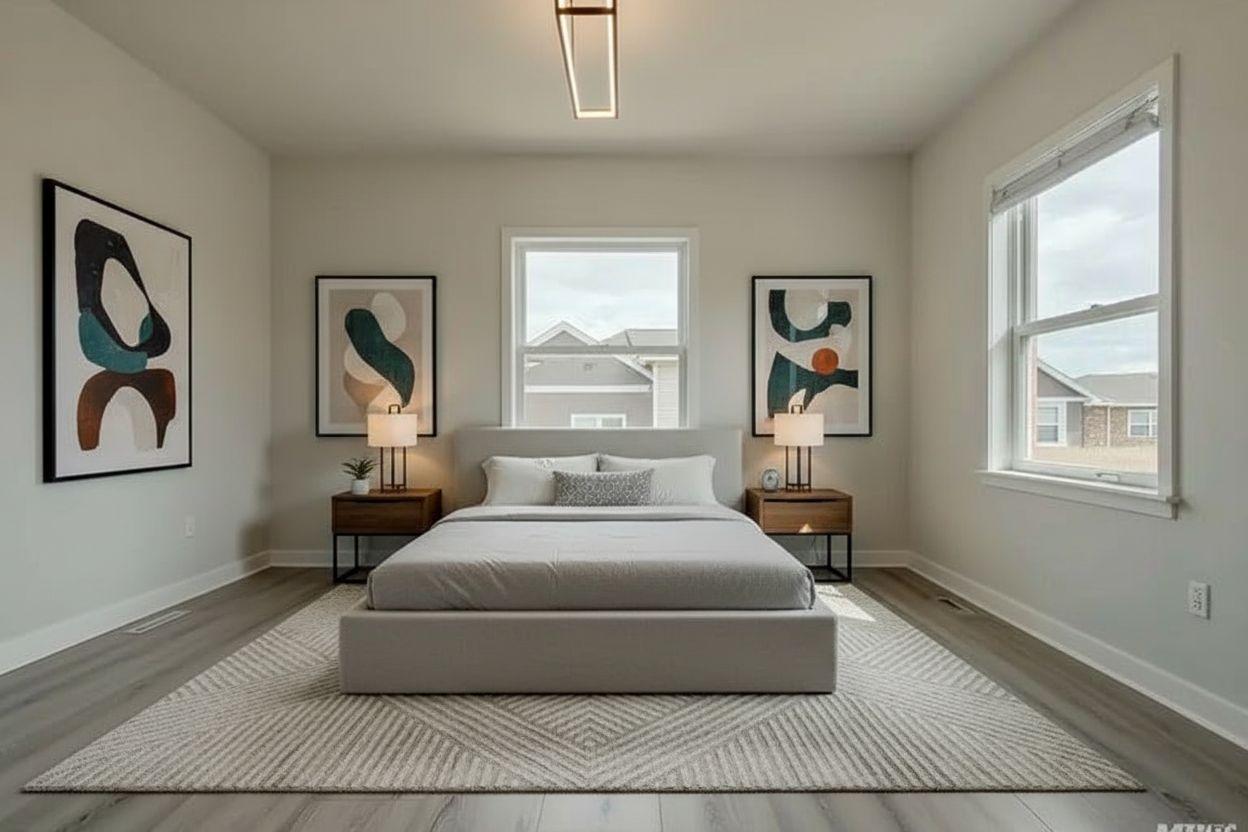
The before image shows a simple neutral bedroom with a grey upholstered bed, mismatched wooden bedside tables and a narrow dresser by the window. Light from the floor-to-ceiling doors fills the room and a slim rug runs along the side of the bed. In the AI concept the bedside tables are replaced with matching white two-drawer cabinets, both topped with brass table lamps, the small dresser by the window appears painted a soft grey and the woven rug is nudged partially under the bed to anchor the sleeping area.
Key achievements
Share this design
Transformation Story
This transformation took 1 edit to complete. Navigate through each step to see the journey.
Original
Starting point
Color Palette
The Transformation Journey
Visually the biggest change is the move toward symmetry: both sides of the bed now have the same white bedside tables and identical-style lamps, which balances the headboard and creates a clearer focal axis toward the window. The dresser near the balcony has a cooler grey finish in the concept, tying it to the bed upholstery while still keeping the same footprint. The rug placement in the concept is shifted so its short edge sits beneath the lower third of the bed, which visually centers the bed on the floor planks. Natural daylight and the window view remain dominant elements; the concept keeps the open view and curtain position intact while introducing small furniture and lighting swaps to refine the room.
What This Transformation Achieved
- Introduced visual symmetry with identical white bedside tables on both sides of the bed
- Added matching brass table lamps to frame the headboard and create a balanced focal point
- Repositioned the woven rug so its short edge tucks partially under the bed, centering the bed on the floor
Color Palette
Lighting Profile
Spatial Layout
Style Assessment
Style Transformation
What we did: space update colors to Place a photorealistic Traditional redesign of the bedroom with easy-care, rental-friendly furnishings: a well-proportioned upholstered grey bed with crisp neutral linen, two painted timeless white bedside tables with warm-brass knobs and matching brass table lamps, a low painted soft-grey dresser at the left window wall, a simple natural-fiber low-pile wool-blend rug centered under the bed (leaving clear circulation), light linen curtains hung to the floor, one small potted plant on the dresser and one framed neutral artwork on the left wall, and subtle warm ambient daylight; Preserve the room's function, the exact camera viewpoint, architectural proportions, windows, doors, radiator location and circulation routes; Constraints: realistic materials and textures, balanced furniture scale that fits the available space, warm-brass finishes on hardware and lamps, keep existing flooring color, maintain natural daylight direction and shadows, do not add people, text, watermarks, or a comparison collage, and do not block the balcony door or circulation; Output target: a single high-resolution photorealistic interior image showing the complete Traditional rental concept.; preserve furniture placement and layout; maintain existing style elements; DO NOT move or change furniture; DO NOT move furniture or change room layout; photorealistic, high-quality, professional interior design photography; maintain existing style aesthetic; web-optimized, crisp details; 2048x1152 for web
AI Reasoning: “Generate one photorealistic Traditional-style redesign of the supplied bedroom that reads as a welcoming, practical rental: add balanced, easy-care furniture (upholstered bed, painted joinery nightstands and dresser), warm-brass accents, natural textiles (linen, wool-blend rug), a plant and framed art, preserve viewpoint, architecture and daylight, and produce one single high-resolution image without people, text or watermarks.”
Will matching bedside tables make the small room feel crowded?
In these images the white two-drawer tables are similar in scale to the originals and keep the same circulation paths; choosing shallow-profile nightstands keeps symmetry without reducing usable floor space.
Does shifting the rug under the bed reduce visible floor area?
The concept shows the rug tucked under the bed’s lower third, which keeps most of the floor visible along the sides and preserves the long-line appearance of the planks while anchoring the bed visually.